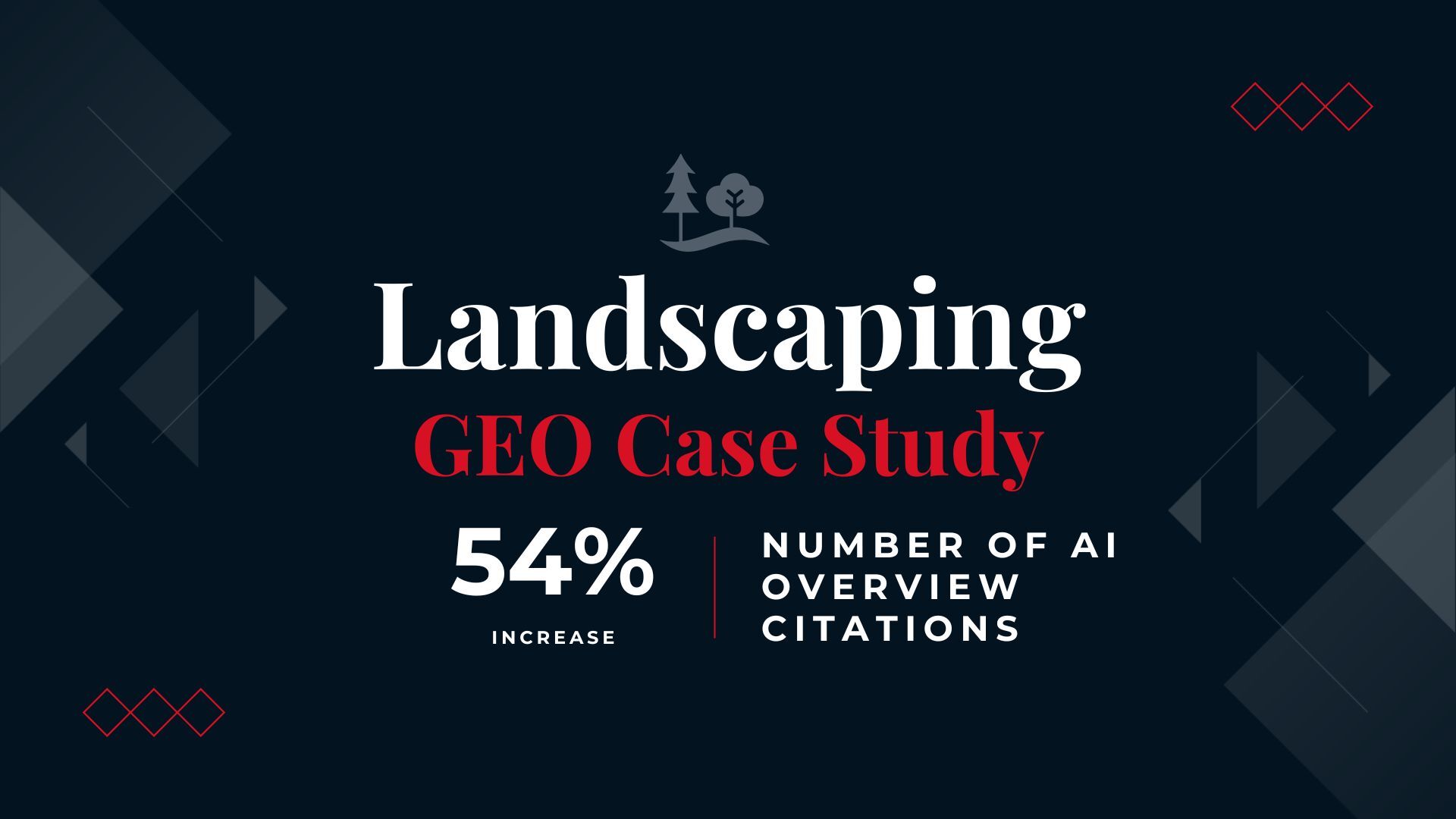
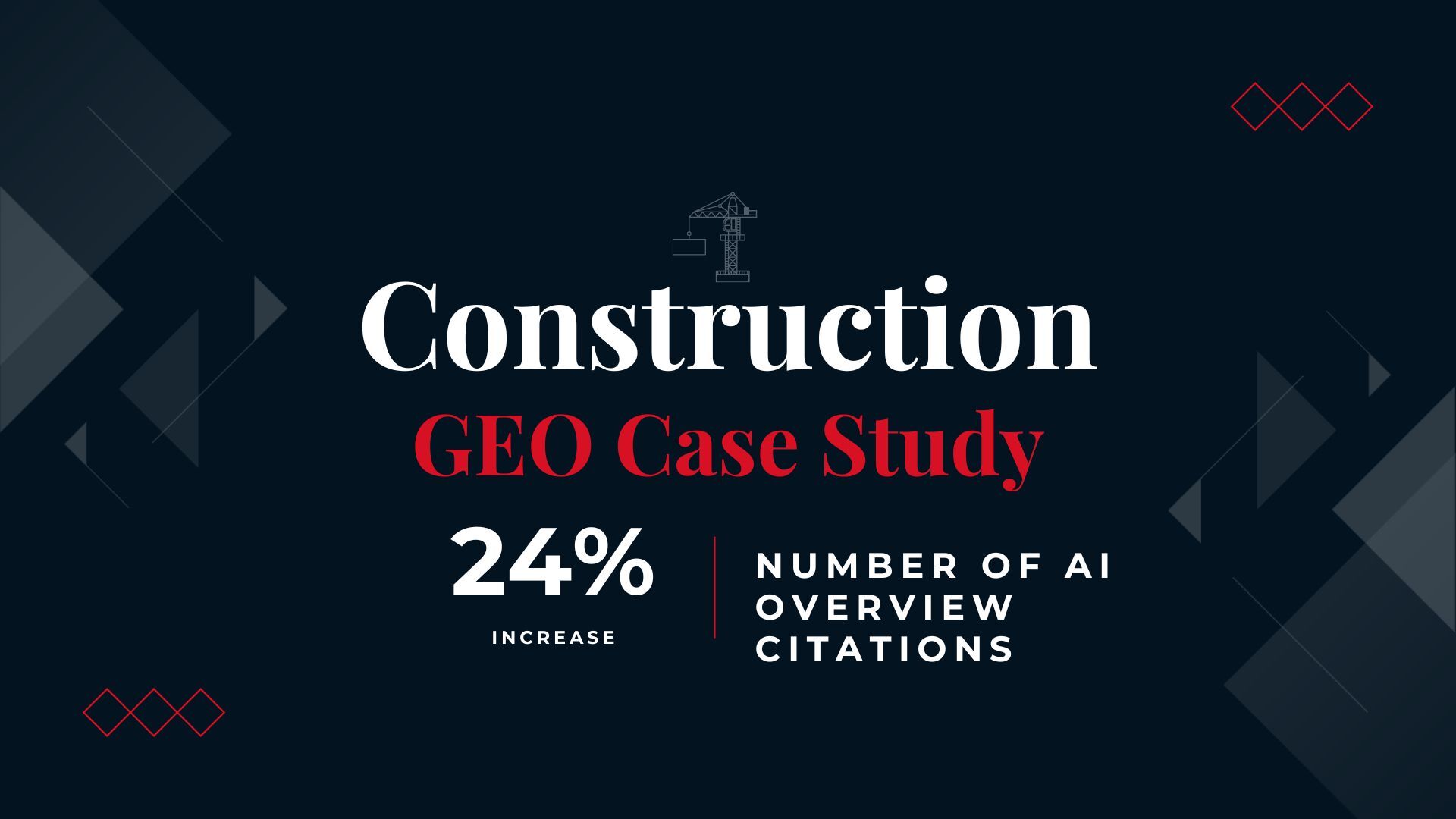
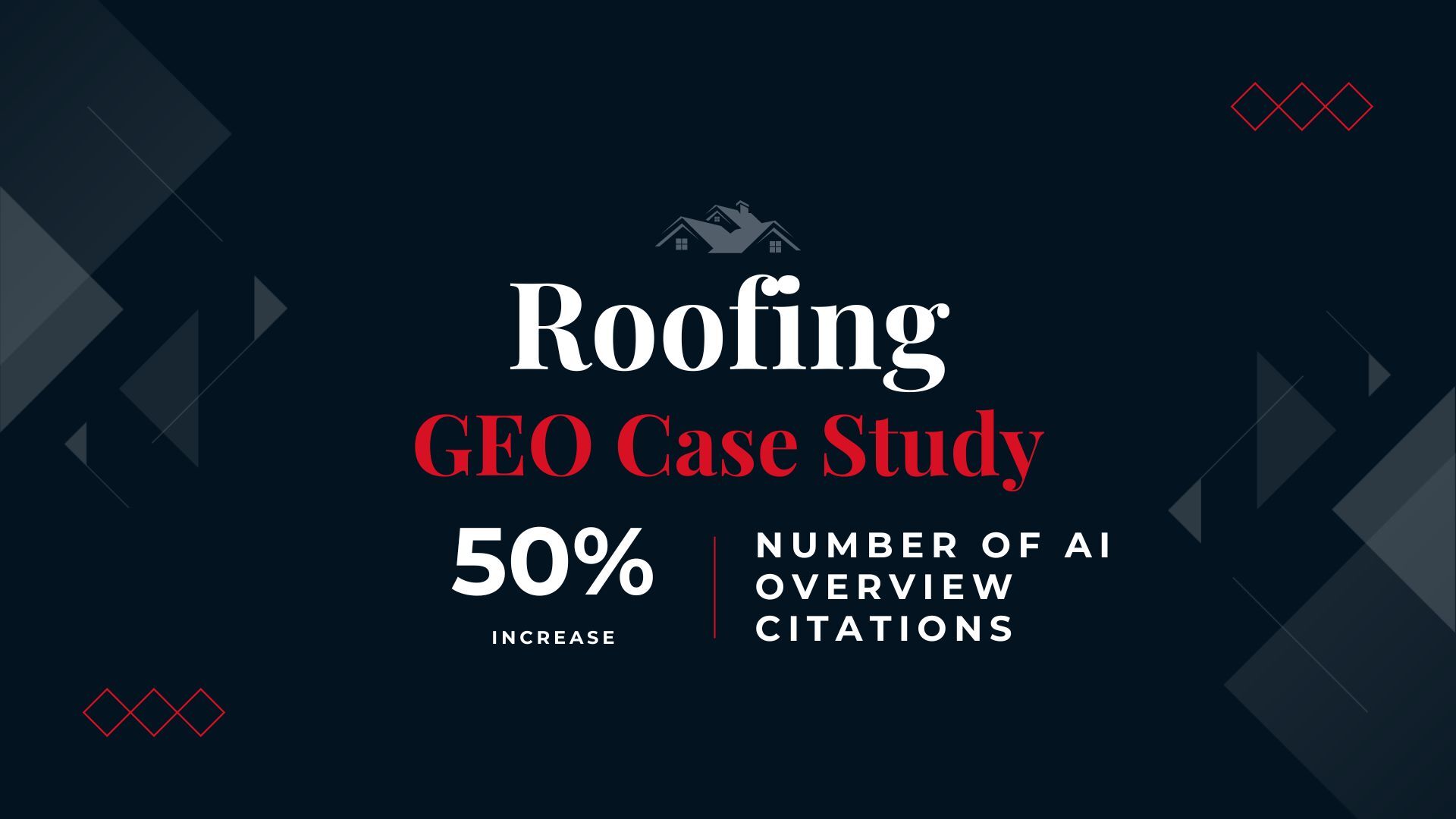
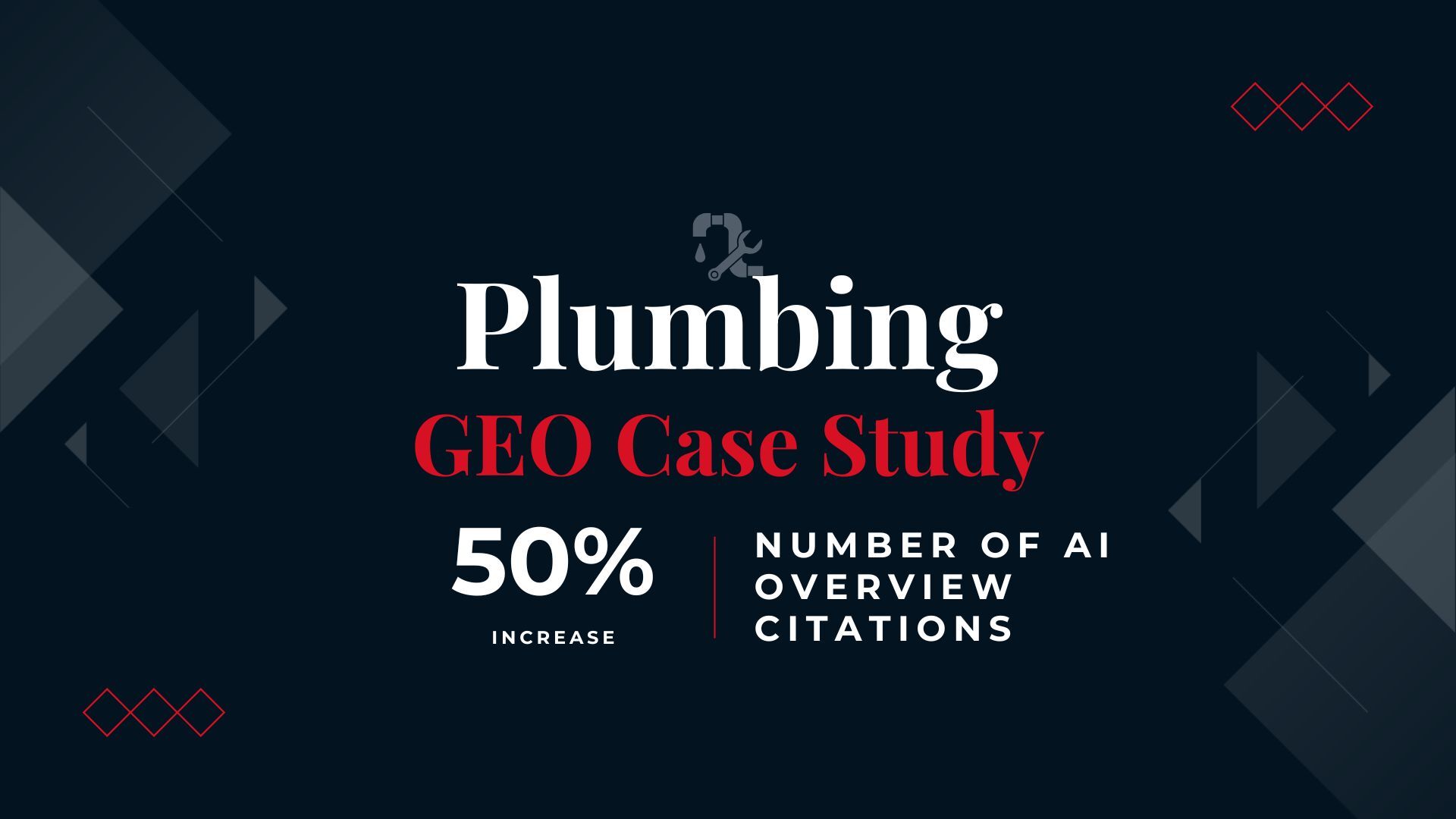
GEO positions your clients’ brands inside Google’s AI-generated responses—not just on page one of Google.
In 2026, our GEO package is expanding to match how search is changing. As more people get answers from generative AI, GEO now optimizes content not only for Google AI Overviews but also for large language models like ChatGPT, Perplexity, and other AI answer tools.
This update helps your clients’ content appear as trusted sources across AI-driven search experiences. Instead of focusing only on rankings, GEO builds long-term visibility and authority where people now ask questions and get answers.
As AI models become the front door to the internet, they increasingly prioritize brands that demonstrate authority, structured knowledge, and real value. GEO helps ensure your clients are cited and referenced across Google AI Overviews and LLMs like ChatGPT and Perplexity—often before a website visit occurs.
Unlike traditional SEO, which focuses on organic rankings, GEO is about being recommended and relied on by generative systems. It positions your clients as trusted sources for informational content that AI models consistently pull from when generating answers in an AI-first search landscape.
Free Branded Client-Facing Support provides access to US based Client Success Managers who act as an extension of your agency. All communication flows through your branded inbox, aDash reporting, and our masked Zoom and VOIP systems. Each cadence includes a monthly reporting call and a dedicated CSM for ongoing email support. ClientCare+ is available as an upgrade for higher touch service.
Ensure your agency is prepared for the rise of AI-driven search. Download your free GEO Readiness Checklist and start future-proofing your SEO today.
Every agency is unique. Our Bespoke Package Builder lets you choose from premium GEO solutions—scaling visibility across AI engines as broad or as precise as you need.
| Category | SEO | Enhanced GEO (New) | Legacy GEO (Old) |
|---|---|---|---|
| Primary Goal | Rank pages in traditional search engines. | Be referenced and cited by generative AI systems across Google AI Overviews and LLMs. | Be referenced in Google AI-generated responses. |
| Search Behavior | User clicks through search results to a website. | AI-generated answers cite, summarize, or reference the brand before a click occurs. | AI-generated summaries within Google search results. |
| Content Focus | Keyword-targeted, structured service and landing pages. | Deep, authoritative informational content structured for AI consumption and citation. | Informational content optimized primarily for Google AI Overviews. |
| Primary Platforms | Google, Bing (traditional SERPs). | Google AI Overviews, ChatGPT, Perplexity, Claude, and other LLM-based answer engines. | Google SGE / AI Overviews. |
| Content Style | SEO-optimized pages designed to rank. | Expert-level, structured content designed to be trusted, cited, and reused by AI systems. | Informational blog content designed for AI summary inclusion. |
| Effective Query Types | Broad query coverage with ranking intent, transactional queries. | Informational, educational, and research-driven queries across AI platforms. | Informational queries within Google search. |
| AI Visibility Scope | Indirect (depends on rankings and clicks). | Direct visibility inside AI-generated answers and recommendations. | Limited to Google’s AI-generated responses. |
| Primary Benefit | Increased website traffic and visibility. | Increased brand authority, credibility, and visibility across AI-driven search and LLMs. | Increased visibility within Google AI Overviews only. |
| Strategic Role | Foundation for organic search performance. | Future-ready authority layer for AI-first discovery. | Early-stage AI visibility within Google. |

Our enhanced GEO strategy is primarily focused on informational and educational searches, where generative AI systems determine which sources to reference, summarize, and rely on when delivering answers. This approach is designed to position brands as trusted authorities for knowledge-based queries that appear across Google AI Overviews and large language models (LLMs) such as ChatGPT, Claude, and Perplexity.
While informational visibility remains the core focus, enhanced GEO also supports location-based and commercial queries when they naturally surface within LLM-driven conversations. In these cases, contextual signals and supporting content help reinforce credibility without making location dependency the primary driver of visibility. The result is a balanced strategy that prioritizes expertise-first content while maintaining relevance for AI-powered local and commercial discovery.
By aligning content with how generative systems evaluate authority, structure, and trust, enhanced GEO enables brands to remain visible across AI-first search environments—whether users are seeking in-depth explanations or contextual, location-aware recommendations.
SEO remains critical because Google still matches user intent with the most appropriate format:
Many local searches still trigger the map pack, where traditional SEO rankings determine visibility. Your clients need strong local SEO to capture “near me” searches and location-based queries on search engine results pages (SERPs) that bypass AI-generated responses entirely.
Google intelligently serves different result types based on user intent. Commercial queries often show shopping results, local queries trigger map packs, and informational queries increasingly show AI responses. SEO ensures your clients rank across all these formats.
While AI responses provide authority and credibility, SEO still drives the majority of actual website traffic and conversions for most businesses. GEO primarily operates in a zero-click environment where users get answers directly in AI responses without visiting websites, making it purely an authority and credibility play rather than a traffic driver.
*Day 1 for campaign fulfillment is marked when all onboarding is complete. We strive to push your clients along in this process as quickly as possible.
Video Onboarding (Please note that your billing date & onboarding date are usually 2-3 days different).
Setup tasks complete & campaign tasks begin.
About ½ of our task work is done by this time for the month.
Our work is just about complete for this monthly cycle.
Monthly report is sent over & call to review is offered.
Please be aware of the following key considerations for your GEO campaign:
Performance Timeline & Competition
Results are not guaranteed to appear immediately, particularly when competing against established, high-authority websites in your target markets. Generative SEO requires patience and sustained effort to build visibility in Google’s AI-generated search results.
Initial Strategy Focus
Our approach begins with targeting low-hanging fruit through informational content optimization. This foundational phase focuses on easier-to-rank content opportunities before progressing to more competitive terms and markets.
Integration with Link Building
For best results, the GEO strategy should be executed alongside a comprehensive link-building campaign. Strengthening domain and regional authority through high-quality backlinks is critical for competing effectively in Google’s generative search environment.
Expected Timeline
Measurement Challenges
GEO performance differs from traditional SEO and presents unique measurement challenges:
Relationship to Core SEO & GBP
AI-focused optimizations are additive, not standalone. They work best when paired with:
AI & LLM Visibility Considerations
Long-Term Success Factors
Consistent publishing, authority reinforcement, and structural clarity are essential. Over time, LLMs and AI systems favor established, well-structured, and consistently reinforced sources.
Accordion Content
GEO stands for Generative Engine Optimization. It is the practice of optimizing content so brands are referenced, cited, or surfaced within AI-generated answers, including Google AI Overviews and leading large language models (LLMs) like ChatGPT, Perplexity, and Gemini. The goal is to position clients as trusted sources wherever AI systems generate answers (not just in traditional search results).
Search behavior is rapidly shifting toward AI-driven answers. Google AI Overviews and LLM tools are often the first interaction users have with a brand, sometimes without clicking a website at all. If a business is not optimized for generative results, it risks being excluded from the conversation entirely, even if it ranks well organically.
Direct, authoritative blog content; expert insights; comprehensive guides; industry analysis; and original perspectives with clear, structured formatting that AI systems can easily parse and trust.
Traditional SEO focuses on ranking pages in Google’s organic results. GEO focuses on making your brand part of the answer itself.
Instead of competing only for blue-link positions, GEO helps your content become a source AI systems rely on, delivering authority and visibility even in zero-click experiences.
Our enhanced GEO strategy targets:
This ensures visibility across both search-based AI results and standalone AI answer engines, covering how users now research, compare, and make decisions.
SEO and GEO are designed to work together:
Together, they ensure brands are visible whether users click or not.
While GEO primarily supports informational queries, its impact goes beyond education. Being cited in AI answers builds brand authority, credibility, and familiarity, which directly influences downstream decisions often before users ever reach a service page.
GEO has evolved into a single, unified AI optimization strategy. Instead of separating AEO and GEO, both are now combined into one offering that targets Google AI Overviews and LLM-based answer platforms. This eliminates overlap, simplifies strategy, and provides broader AI visibility across the entire generative search ecosystem.
No. AEO has been merged into GEO. The strategies previously associated with Answer Engine Optimization are now fully incorporated into the enhanced GEO framework, ensuring complete coverage across AI-powered discovery platforms without fragmenting services.